On July 21, 2026, SIGGRAPH 2026's renowned program "Real-Time Live!" was held in Hall K of the Los Angeles Convention Center in Los Angeles, USA.
Real-Time Live! is a festival of live demos where computer graphics and interactive technologies are shown running on actual hardware to the audience on the spot, rather than as pre-completed videos. The official presentation guidelines require real-time presentation of approved technologies, without relying on pre-recorded footage or slides. This year, 8 works with diverse directions, from generative AI, rendering, simulation, and robotics to education, were selected.
Mk Haley, the Real-Time Live! Chair, who served as host, emphasized this year's theme: real-time technology that leaps out of the screen and into the real world. The audience cheered, posted images from their smartphones, and finally, the audience and YouTube viewers voted for the Audience Choice Award. The thrill of this event lies in putting the possibility of failure on stage.
1. Promptable AI Camera
The first presentation, "Promptable AI Camera," by AP University of Applied Sciences and Arts Antwerp in Belgium, is a real-time camera that can edit video using natural language.

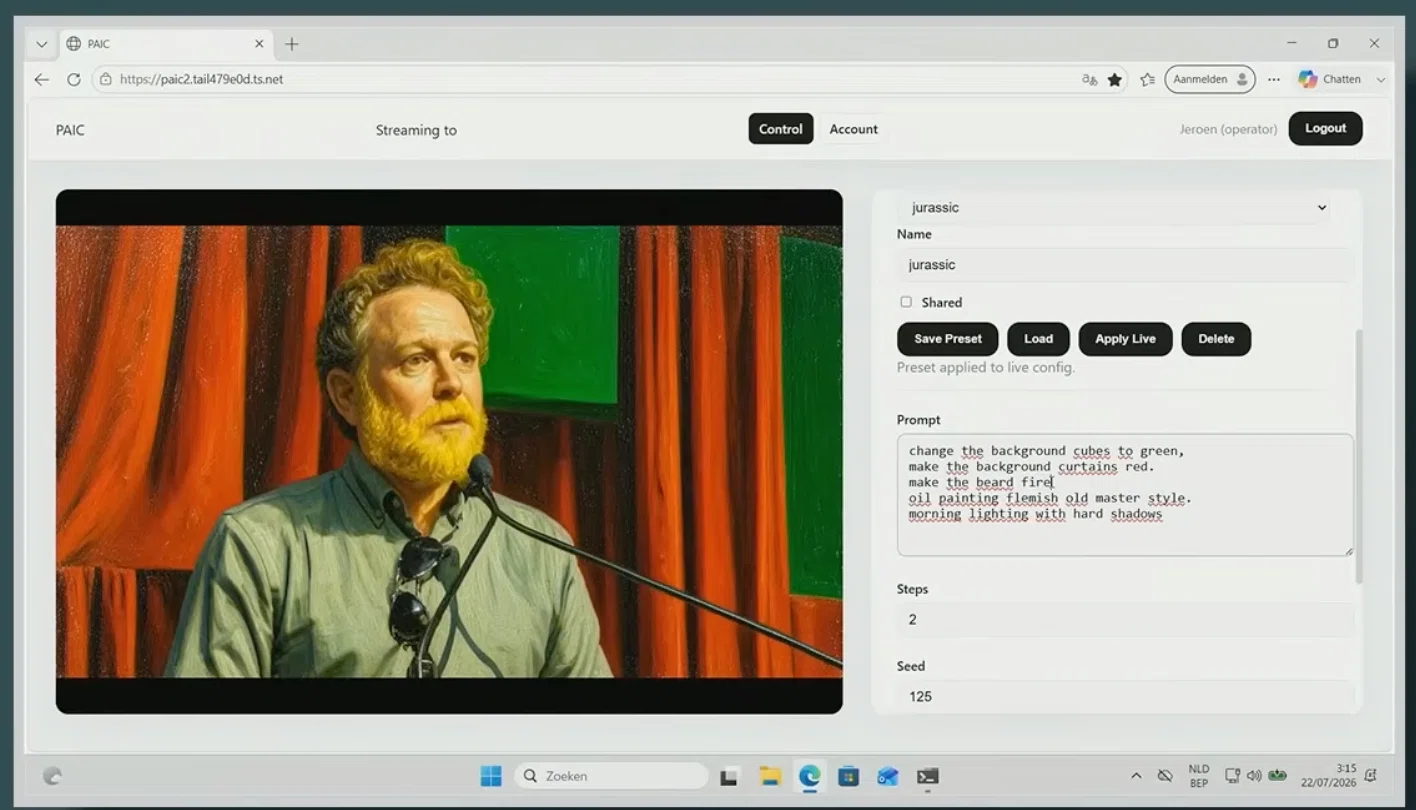
When the presenter gave instructions like "make it a Jurassic jungle," "make the shirt red," and "remove the sunglasses," the camera feed's background and parts of the person changed one after another. Furthermore, different styles were layered on different regions, such as the person in a manga style, the background in colorful surrealism, and only the beard in purple.
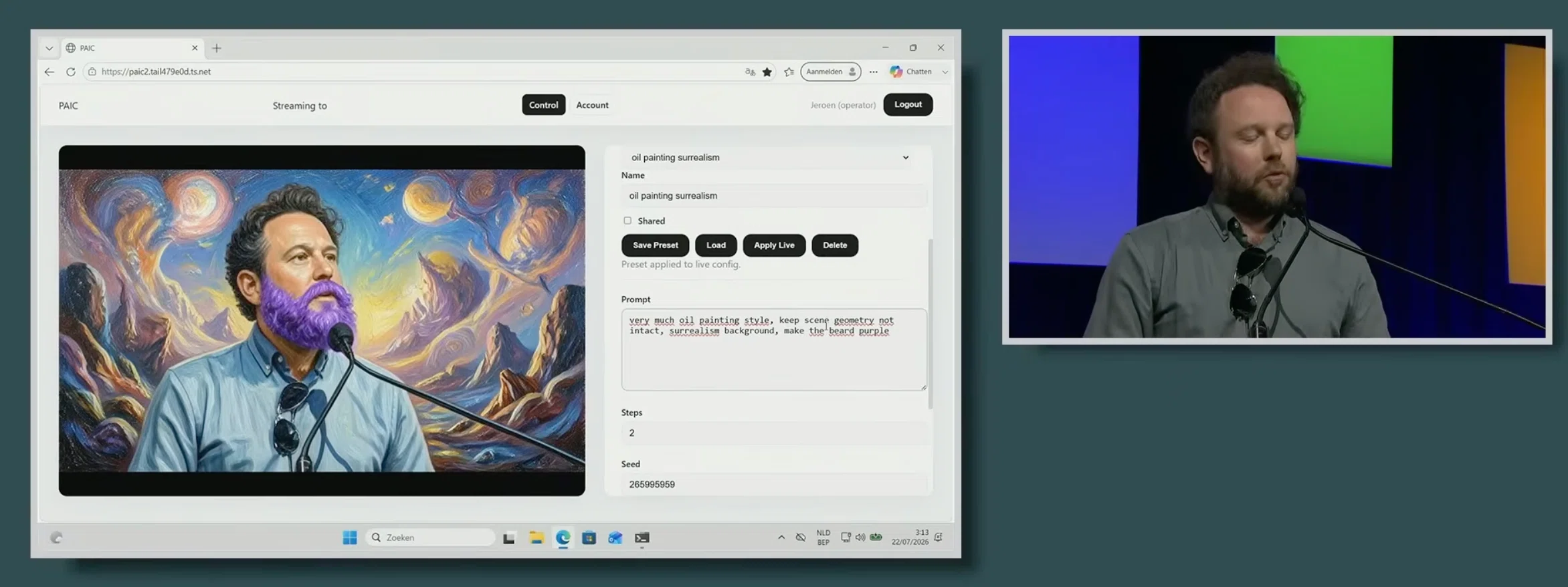
Although there was some delay because the processing was done on a server in Belgium, the way the appearance was rewritten while maintaining the composition and movements of the person in the live video sufficiently challenged the concept of a "camera."
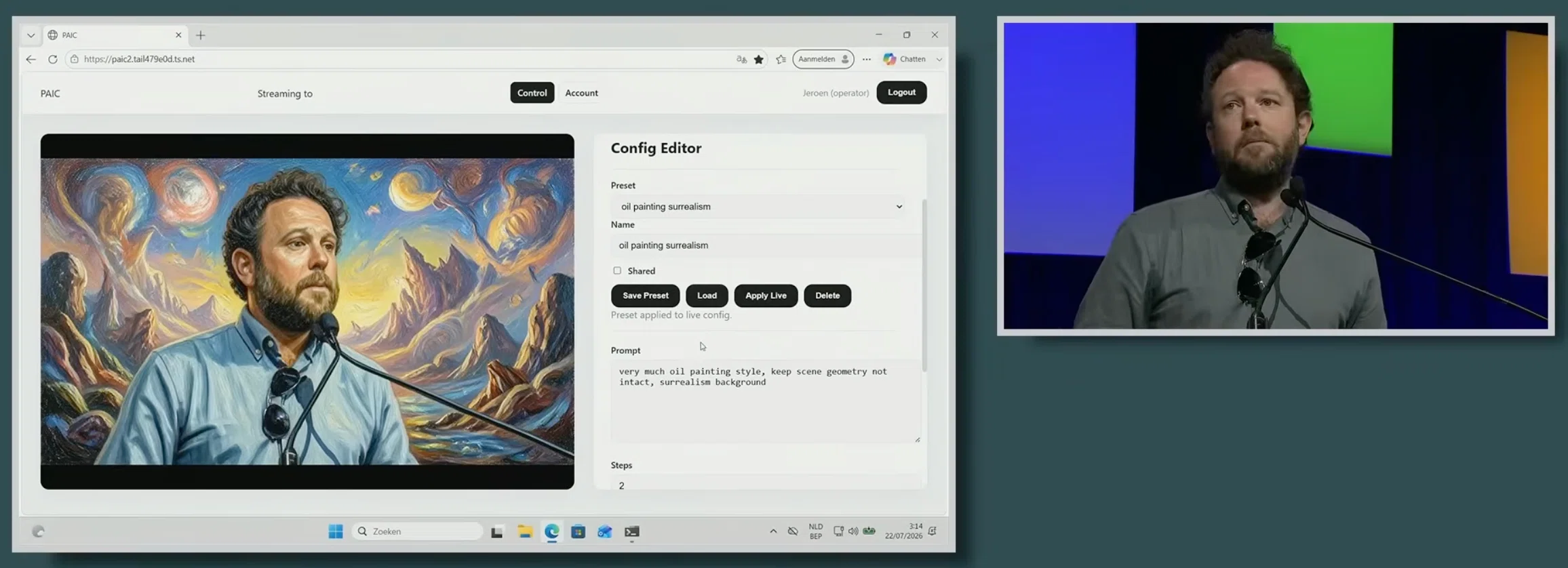
Instead of shooting and then editing, the AI interprets and directs reality during shooting. This proposal directly applies to live streaming, virtual production, and event direction.
2. ZibraGDS: Cinematic-Quality Animated Geometry Compression and Real-Time Playback
Zibra AI's "ZibraGDS" is a technology that compresses cinematic-quality massive animated geometries and plays them back in real-time within a game engine.
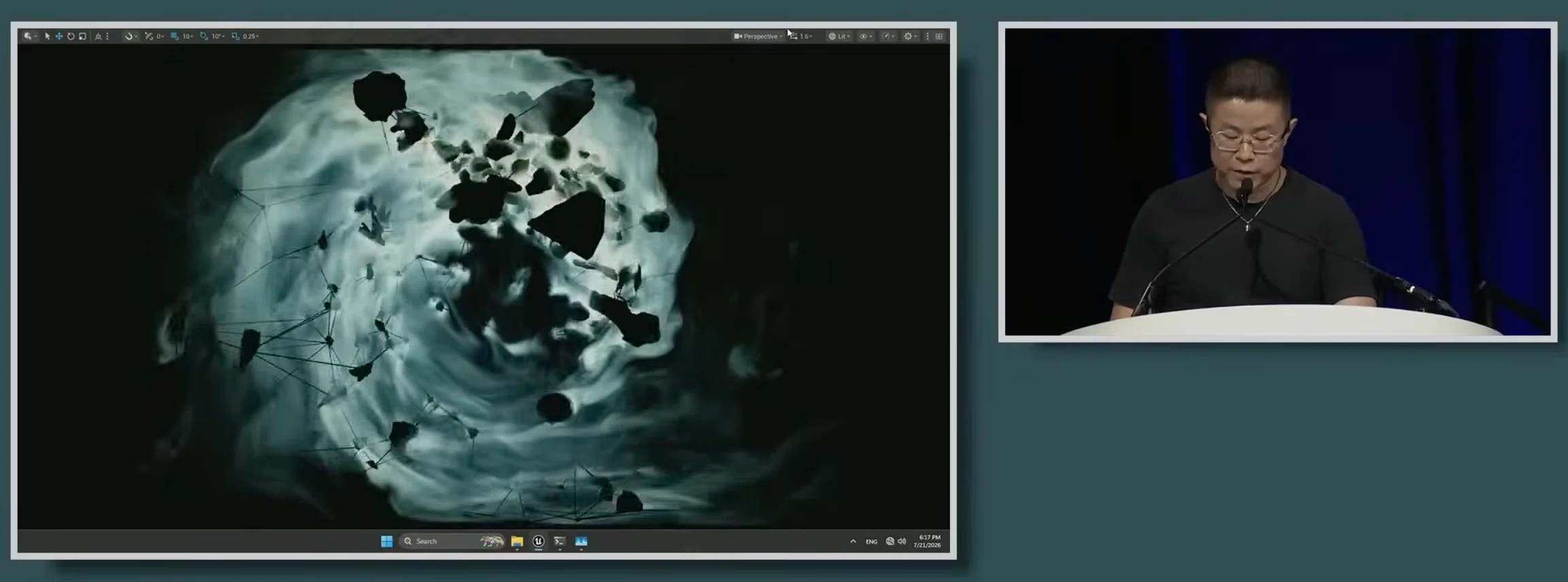
In VFX like fire, destruction, debris, vegetation, collisions, and water flow, shapes change every frame. When attempting to bring high-quality simulation results from tools like Houdini into Unreal Engine, data size and playback load become a barrier.
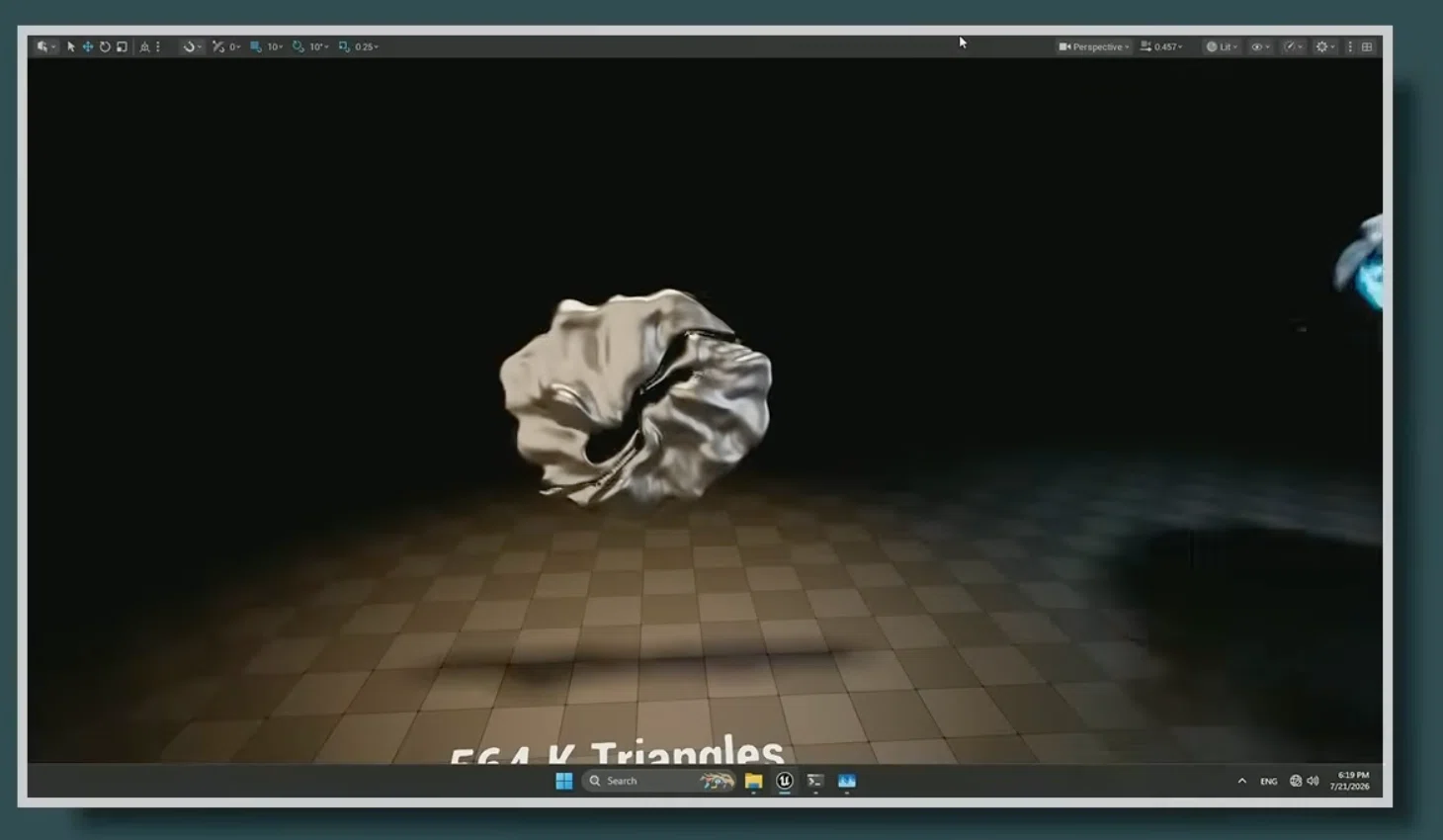
ZibraGDS compresses multiple attributes such as position, normal, color, UV, and velocity for the GPU, and expands and renders only the necessary parts. By dividing the mesh into small units and not expanding attributes for parts outside the field of view, it efficiently handles high-density shapes.
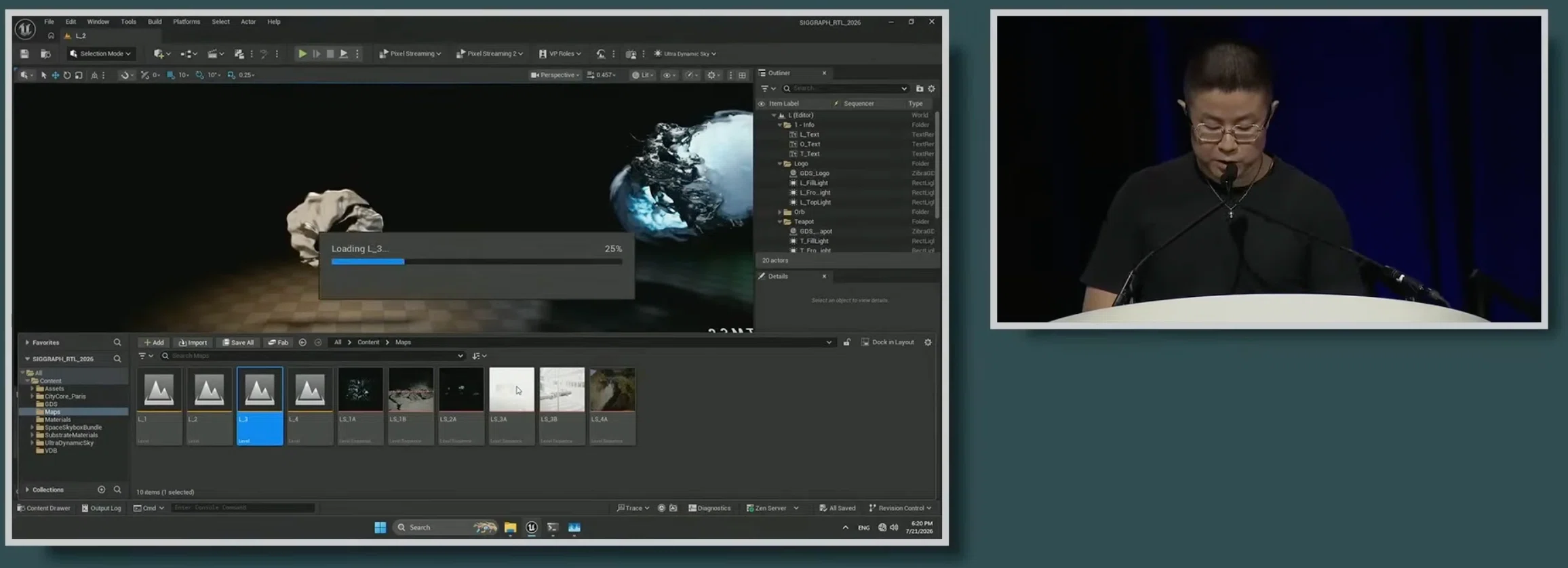
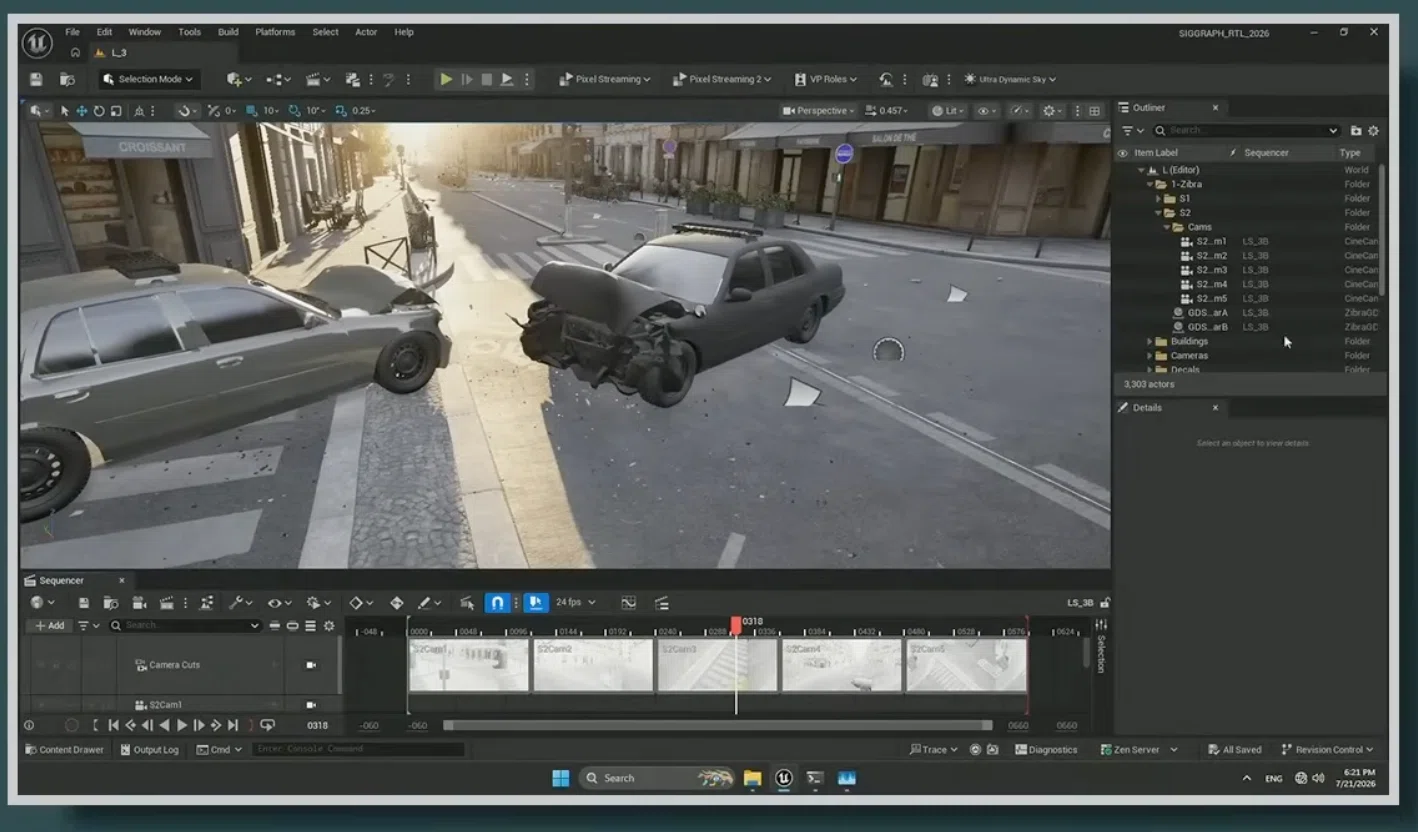
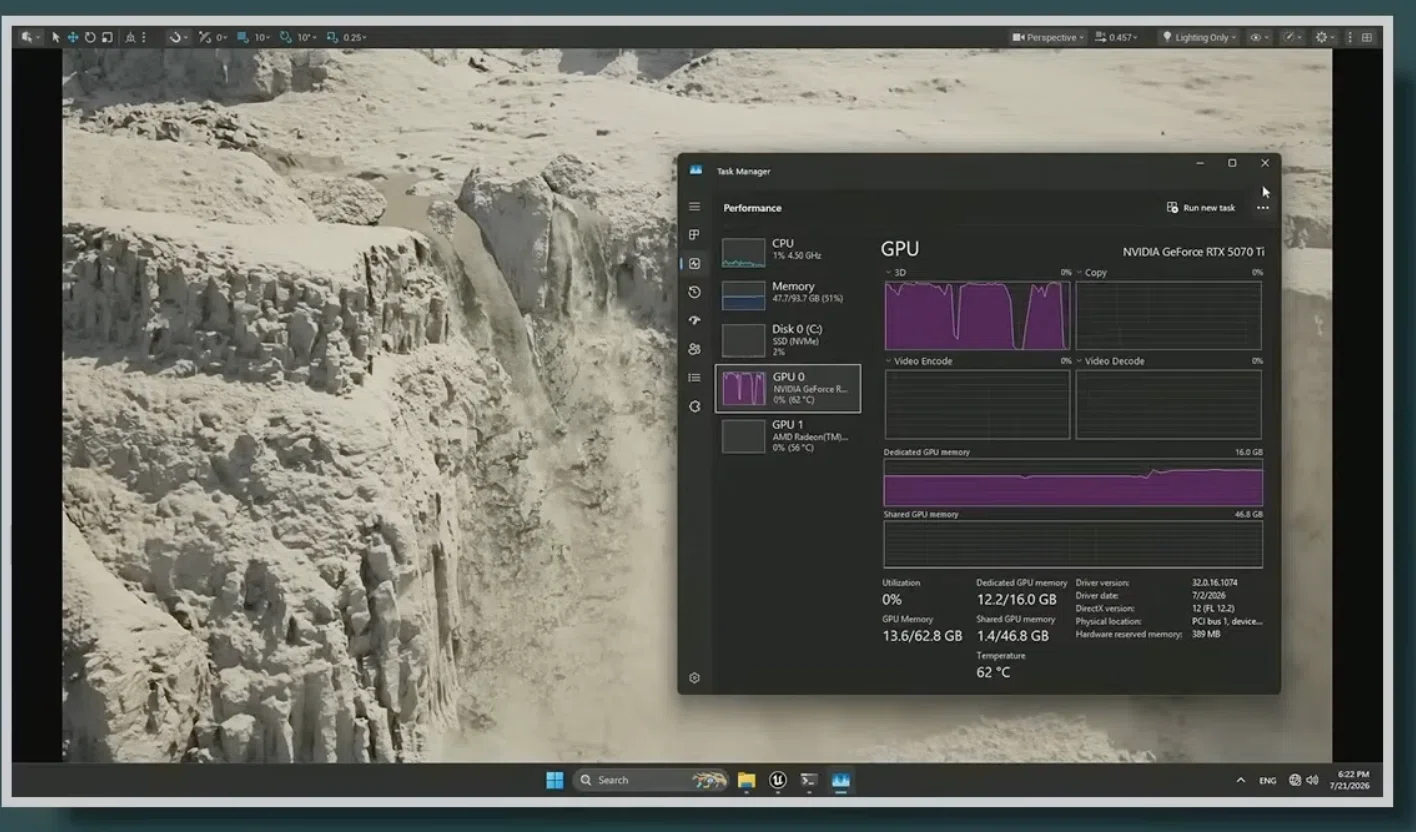
On stage, destruction expressions involving tens of millions of triangles, simulations of plants deforming under external forces, vehicle collisions, and waterfalls with millions of triangles were played back in real-time. The presentation showed data reduction of 80-92% compared to Alembic caches and rendering 5-10 times faster than existing methods.
What's important is not just capacity reduction. It's the ability to interactively review cinematic-quality expressions created offline, and change lighting and cameras on the fly. The boundary between film and game production pipelines has become thinner yet again.
3. HiPR: Hierarchical Progressive Rendering for Immediate Feedback
The University of Utah's "HiPR" is a method that, instead of redrawing the entire scene every time, prioritizes re-rendering changed objects and parts affected by those changes.
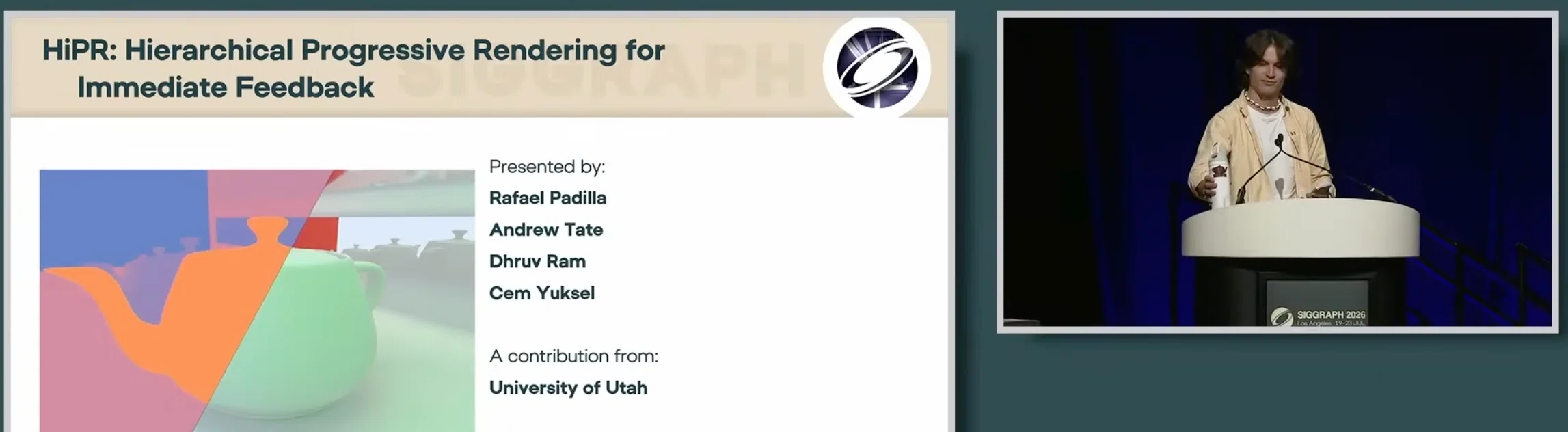
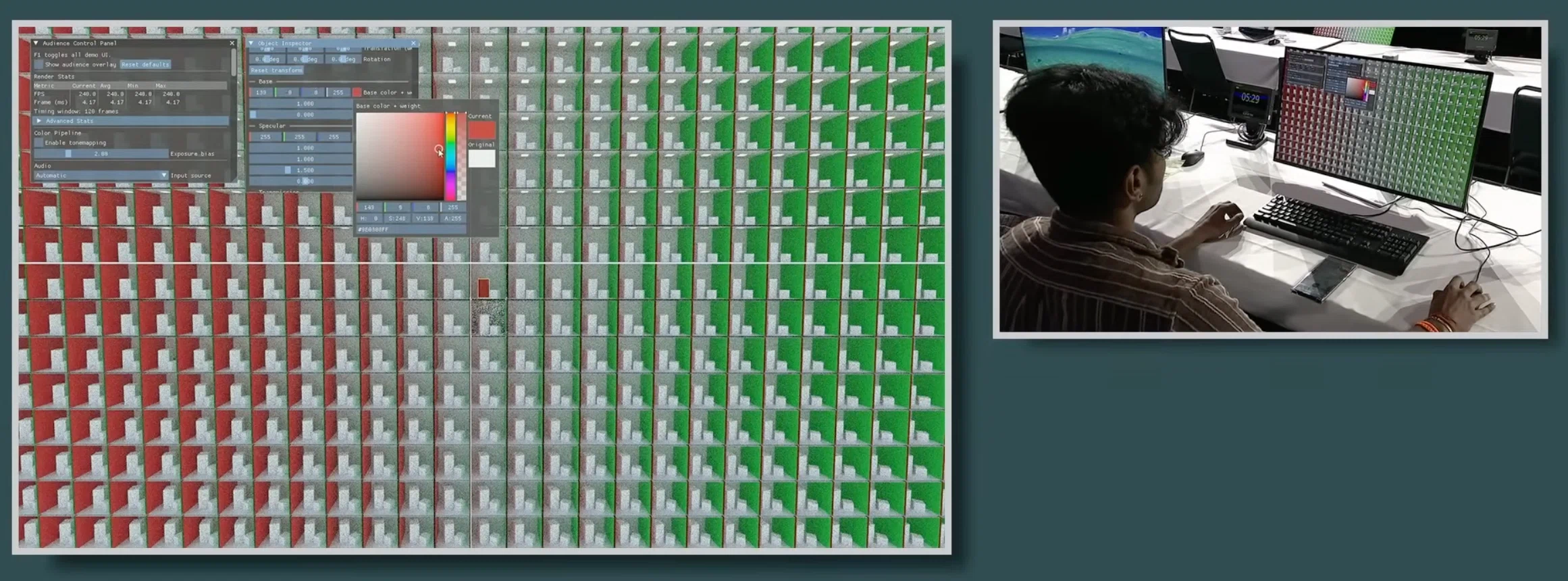
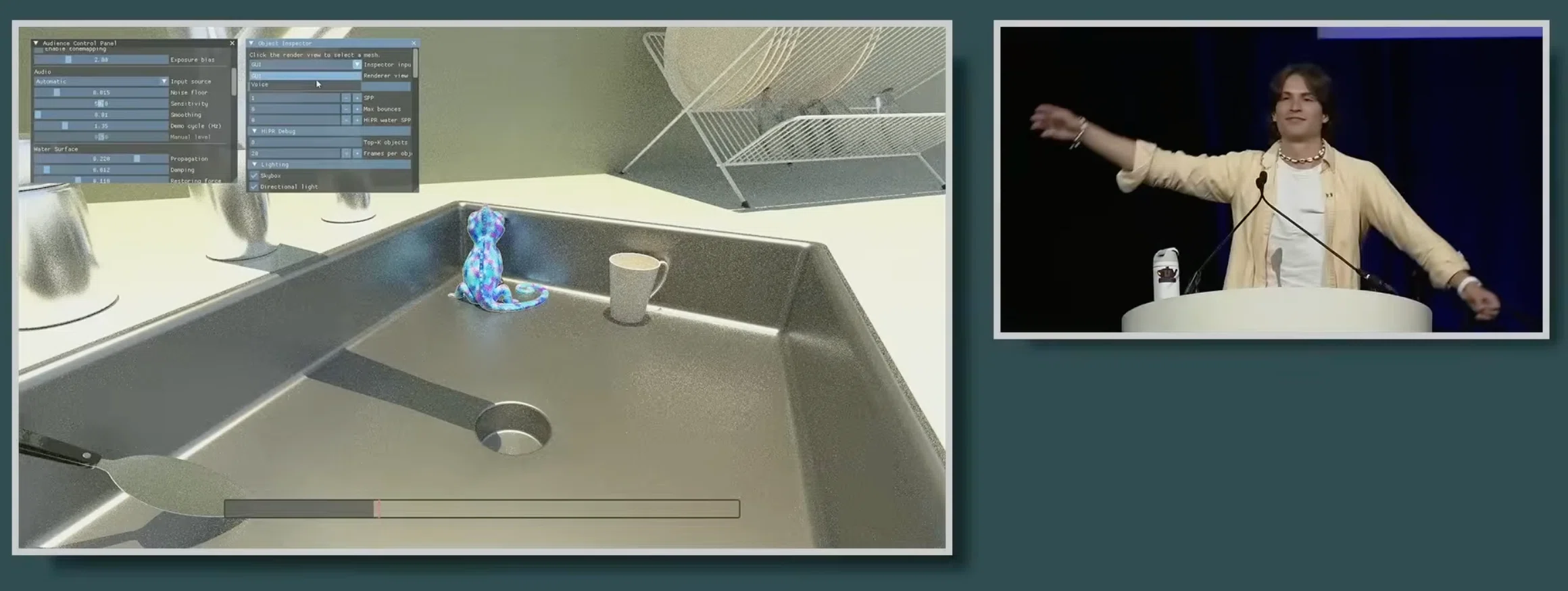
The demo began with a scene of a million Cornell Boxes lined up. When materials like mirrors, metals, transparencies, and emitters were changed, the light changes propagated progressively from that object to its surroundings. This mechanism traces already computed light transport relationships from the point of change to determine the next object to draw.
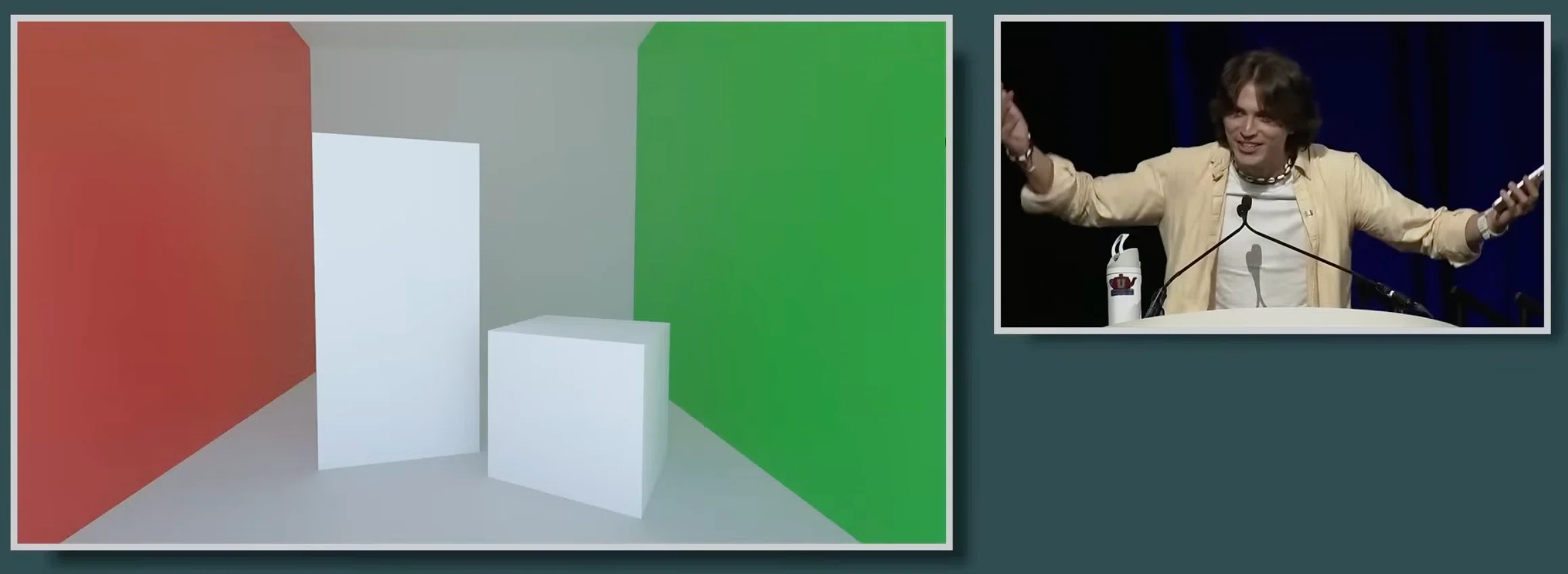
In the latter half, an audience-participation demo titled "Camouflage That Chameleon!" was conducted. As the audience's volume increased, the chameleon's color approached that of the walls and furniture, and its reflections and indirect lighting were updated in real-time.
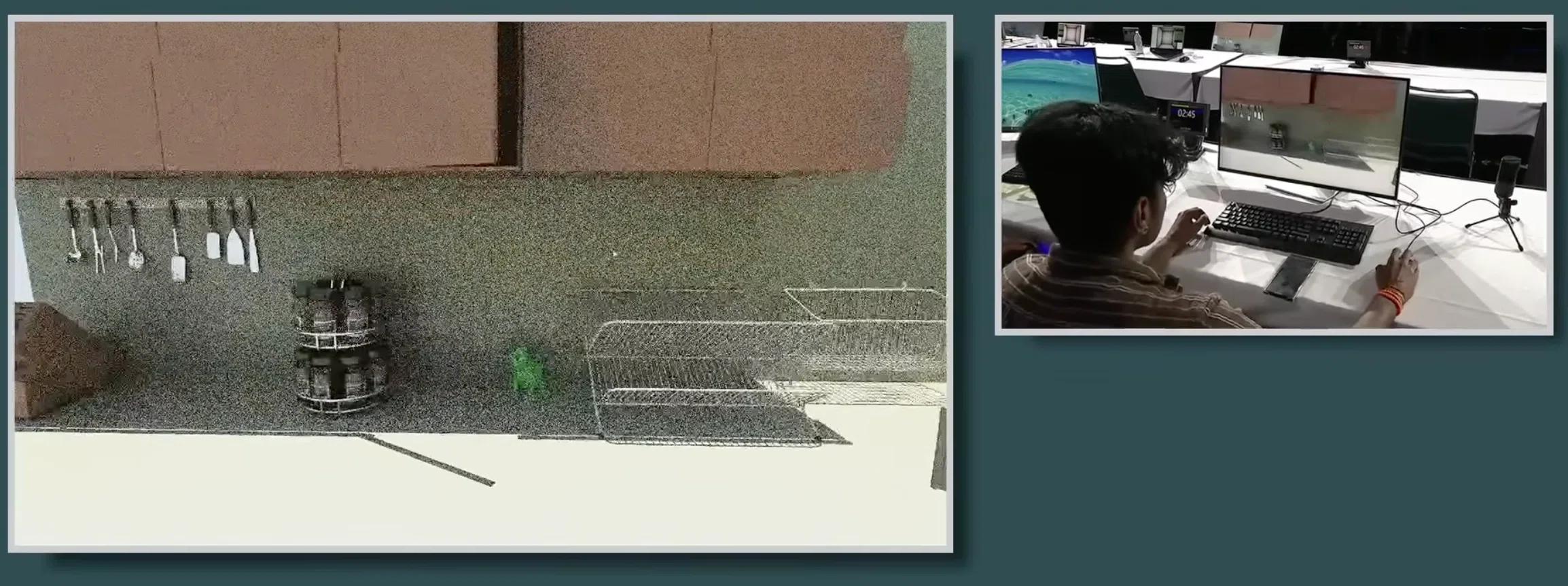
This research, which cuts down on waiting time with rendering algorithms themselves without using AI, is effective for production sites that repeatedly make changes and reviews, such as look development, virtual production, games, and foveated rendering.
4. Game-Ready Hair in Minutes! Hair Mesh Modeling with Physics
Digital hair is a challenging area where beautiful still images can be created, but it's difficult to make it move lightly and continuously in games.
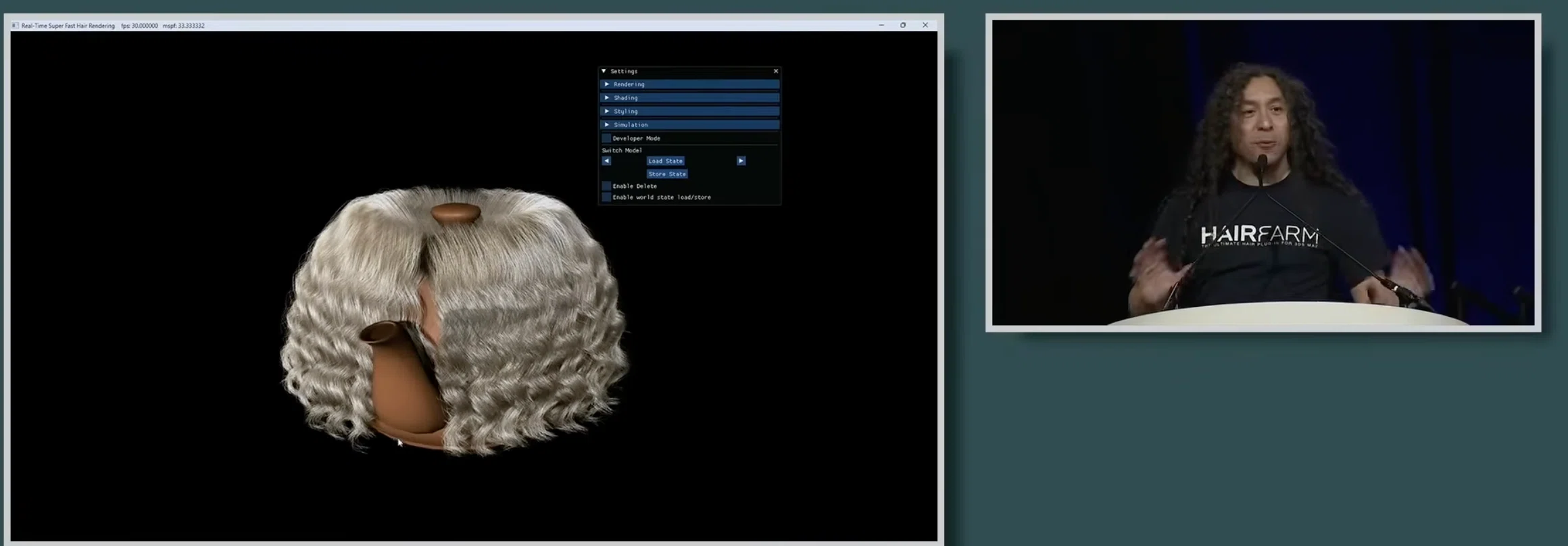
"Game-Ready Hair in Minutes!" proposed a workflow where, instead of directly editing individual strands of hair, a low-resolution "Hair Mesh" representing the overall volume of hair is edited, and hair is then generated within it.
The Hair Mesh can be extruded like a polygon model, and its length, volume, and tip angle can be adjusted. Behind this, a physics simulation continuously runs, correcting the overall hairstyle so that its shape doesn't collapse even if parameters are changed.
On stage, Mayar Youksell, a 14-year-old with no 3D modeling experience, appeared. Using a tool she had practiced with for only a few hours, she quickly created a Hair Mesh. She changed straight hair to a strongly curled style, and by adjusting hair quantity, clumping, curl, elasticity, and damping, she finalized the hair to move in a game.
Related technology was described as being able to rasterize 100,000 strands of hair in less than 1 millisecond, maintaining efficiency even when lining up 100 characters.
A technology announced as a paper transforms into a production tool that even a child can operate. The chain from research to practical application was also a highlight typical of SIGGRAPH.
5. Runway Characters: Real-Time Expressive AI Characters from a Single Image
Runway's "Runway Characters" are real-time video agents that generate conversational, expressive, and lip-syncing characters from a single image.
Without additional training, it handles everything from realistic humans to animals and anime-style mascots, operating at HD resolution and 24fps. It is based on Runway's General World Model "GWM-1."
On stage, Nathan Matsuda, SIGGRAPH 2027 Real-Time Live! Chair, was filmed on the spot, and a conversational character resembling him was created in about 15 seconds. It was a scene like a mirror slightly shifted into the future, where the person conversed with their own AI character.
Next, "Pix," created from a single cat image, appeared and explained the system's mechanism itself. An audio agent generates a response, and that audio is passed to an audio-to-video model to generate video frame by frame.
The presentation explained that it processes approximately 37 milliseconds per frame, suppressing latency by executing Diffusion Transformer and VAE decoder in parallel.
From "AI that creates images" to "AI that talks to people in images." The boundaries of character creation, in-game NPCs, education, customer service, and streamer support are rapidly converging.
6. Create Interactive 3D Assets in Seconds!
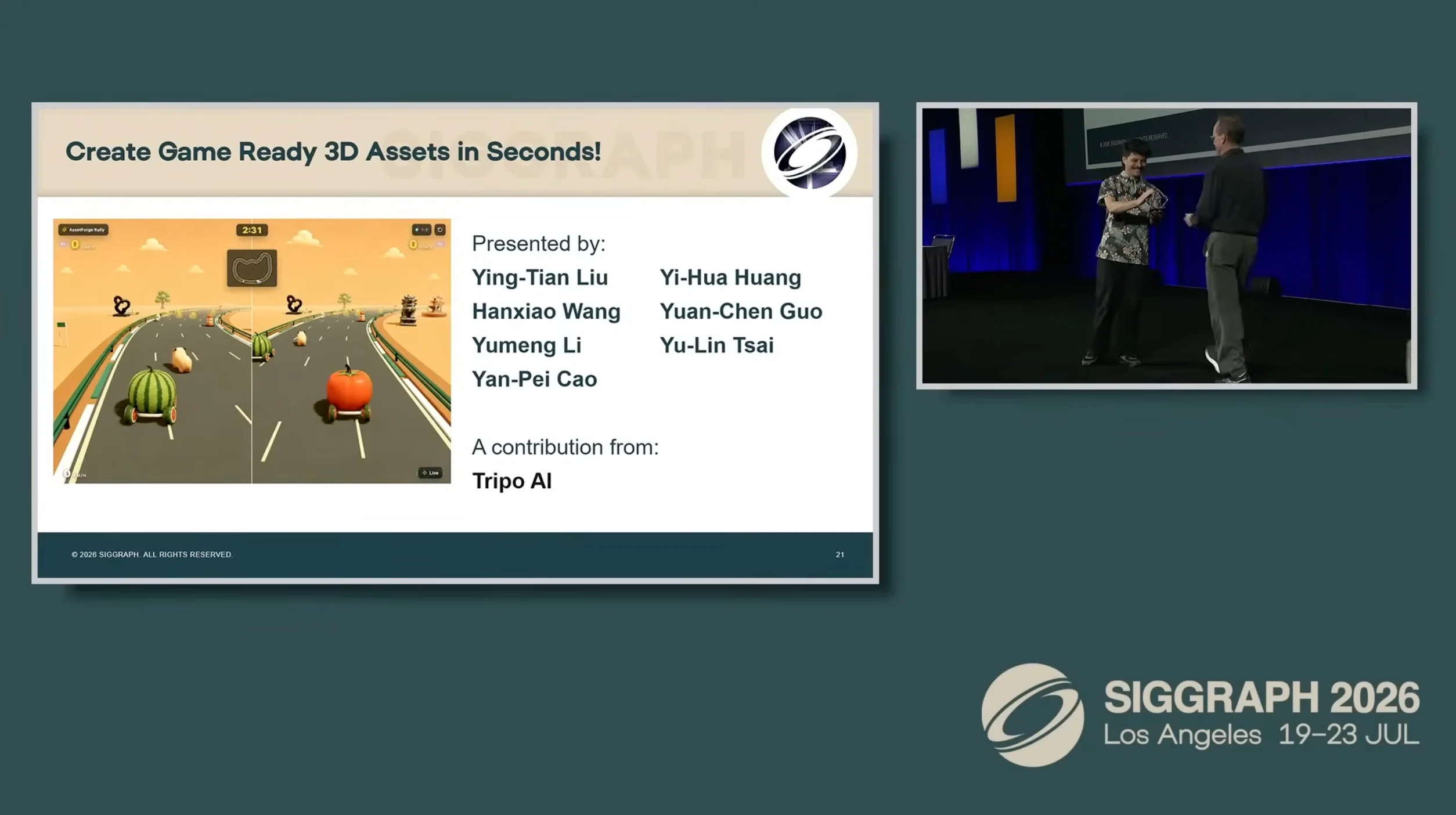
"Create Interactive 3D Assets in Seconds!", which received the Best in Show award, is a system that generates 3D assets with textures, rigs, and animations from images or text in seconds, and immediately integrates them into a game on the spot. This was presented by the VAST research team and 3D generative AI "Tripo."
In the demo, a treasure chest inscribed with "SIGGRAPH 2026" was first generated with approximately 2,000 polygons. Then, a complex character was organized into about 20,000 polygons, making it a game-ready model that retained its shape features.
The important point is not just outputting high-density 3D shapes, but being able to specify polygon count according to purpose, and even perform part segmentation and rigging.
Furthermore, the audience posted images via QR code, generating hundreds of 3D items in a short time. Objects like a delivery robot-style car, a "Teapot Car" made from the Utah Teapot, a crab, a spear, and even a surprisingly popular potato were successively integrated into a shared racing game.
The presenter recalled, "Six minutes ago, there was only a box." Connecting generation, optimization, rigging, animation, and game integration into a single live experience must have been highly praised by the judges.
This work showed that generative AI not only speeds up asset creation but also transformed all audience members into instant co-creators.
7. Dissectible Anatomy: Embodied Exploration for Education
Purdue University's "Dissectible Anatomy" is an anatomical education system that allows users to cut, tear, open, and extract 3D models of human and animal bodies in real-time.
It is based on color cryosection images created by the Visible Human Project of the U.S. National Institutes of Health. Sectional data obtained by freezing cadavers and slicing them 1 mm at a time is used as 3D textures.
The model's interior consists of numerous particles and shape constraints, with deformable splats embedded between them. During cutting, the weight of the constraints affecting the left and right sides of the incision is updated, allowing both sides to move independently.
It also supports retraction for opening incisions, tearing halfway, and excision for removing organs. If segmentation data of anatomical structures is available, organ names can be displayed, or specific structures can be extracted.
At the venue, not only human bodies but also dogs and armadillos were cut without mercy, and the presenter rattled off anatomy-related puns. The high level of technology and the stage direction that allowed the audience to understand the function at a glance perfectly meshed, earning it the Audience Choice Award from venue and online viewers' votes.
Instead of replacing actual dissection practice, this allows students to safely perform preliminary practice and review. It's a work that regenerated old scientific data into a new learning experience through real-time simulation.
8. Olaf: Bringing an Animated Character to Life in the Physical World
Disney Research's "Olaf" is a robotics research project that brings the character from "Frozen" into the physical world, including not only its appearance but also its movement and personality.
Olaf has a large head, a slender neck, and small snowball feet, and in animation, he makes movements unsuitable for a real robot.
The research team hid asymmetrical legs inside a soft foam skirt, making it appear as if his feet were moving freely beneath his torso. Spherical and planar linkage mechanisms are used for the arms, mouth, and eyes to fit within limited internal space.
Reinforcement learning was employed for motion control to mimic animated reference movements. However, simply walking as he looks does not make him a character.
Hard footsteps break the sense of life, and actuators housed in his slender neck overheat when moving his large head. Therefore, the research team added rewards to the learning to suppress foot impact sounds and to avoid overheating by using temperature as input.
This is not research to create a "walking robot," but to create a "robot that can exist like Olaf." It demonstrated that the evaluation axis for physical AI is expanding beyond stability and efficiency to include character persuasiveness.
Please note that this section is based on the official SIGGRAPH program and Disney Research's public information, as this part of the public streaming transcript is not included.
Best in Show and Audience Choice Award
"Create Interactive 3D Assets in Seconds!" received the Best in Show award from the judges.
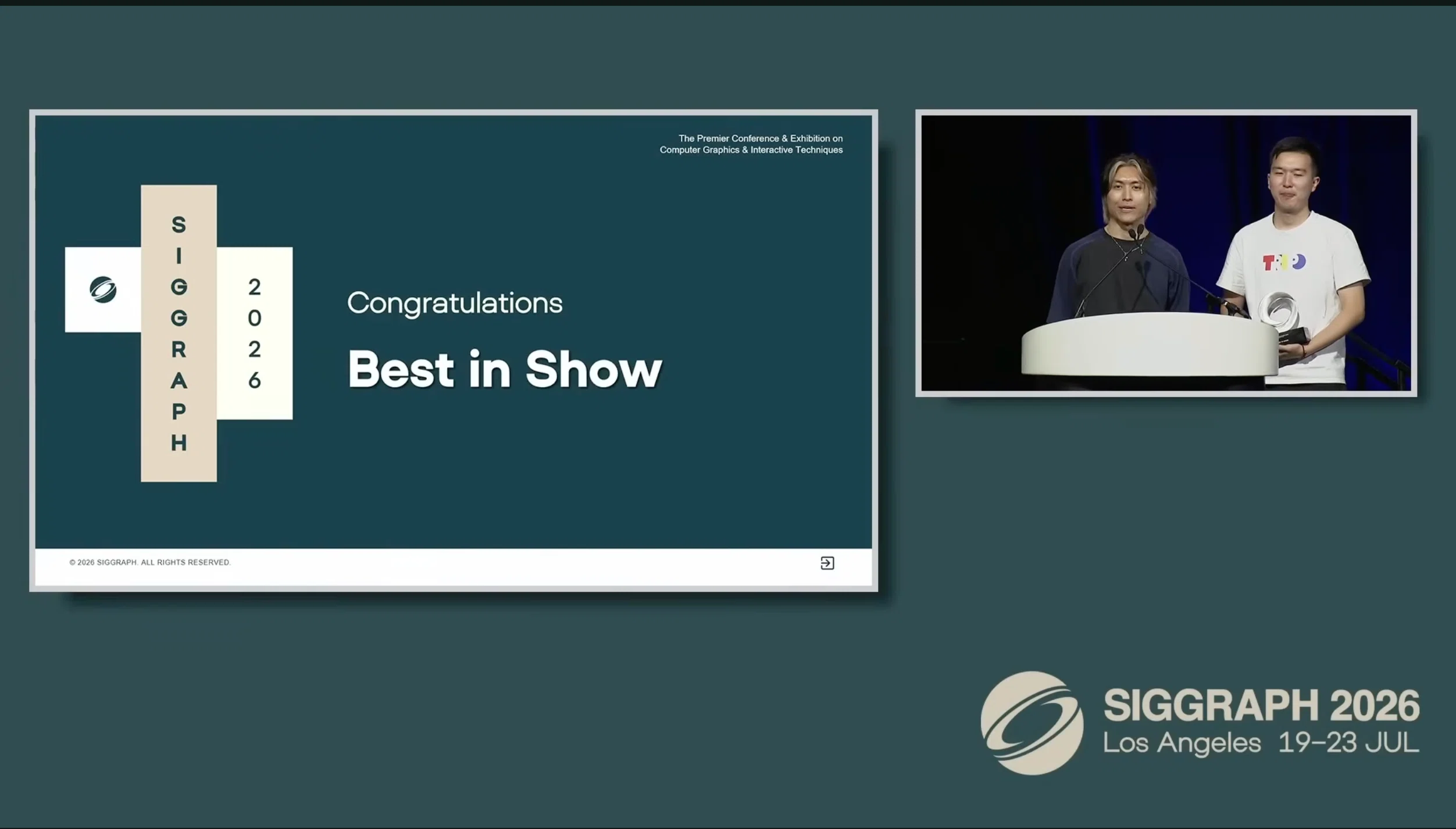
The entire process of generating 3D assets in minutes, incorporating audience submissions, and integrating them into a playable racing game, combined generative AI, real-time 3D, interaction, and live presentation into one.
"Dissectible Anatomy: Embodied Exploration for Education" received the Audience Choice Award through audience votes.
The clarity of operations like cutting, tearing, and opening, combined with scientific data, educational purpose, and stable real-time deformation, strongly resonated with non-experts as well.
What SIGGRAPH 2026's Real-Time Live! Showed

Looking at the 8 works side by side, generative AI was not the only star this year.
Promptable AI Camera and Runway Characters brought AI that generates video closer to live performers. Create Interactive 3D Assets in Seconds! connected generative AI to game production and audience participation.
Meanwhile, ZibraGDS, HiPR, and Hair Mesh leveraged robust CG research in data compression, light transport, and physics simulation to reduce creators' waiting times.
Dissectible Anatomy transformed scientific data into a physical learning experience, and Olaf brought a character from the screen into reality.
What they have in common is not just displaying computation results quickly, but allowing people to touch, talk, shout, create, and receive meaningful responses on the spot.
Real-time technology brings cinematic quality to games, transforms still images into conversational partners, turns audience smartphones into 3D production terminals, and imbues animated personalities into robots.
The exclamation mark in Real-Time Live! was not just for show this year either.
AICU Media Thanks to all demo players and streaming staff.
AICU | SIGGRAPH
corp.aicu.ai SIGGRAPH | AICU Japan is born, strengthening AI information and creator support for the Japanese market. Latest technologies and events...